
Remedies
Published January 1, 2021
Mantras are an integral part of Vedic healing rituals created by ancient Indian sages (rishis). In addition to mantras, these healing rituals include puja (pooja), offering gifts, yantras, meditation, wearing talismans, and other practices. The most effective and widely used form by the sages is puja (pooja), which is the ritual of invoking higher divine energies.
For practitioners of various forms of puja, the spiritual and religious connection through prayer, ceremonies, and requests for divine help and guidance is paramount.
The purpose and objective of these rituals is to help individuals overcome the adverse influences of planets that affect them due to karmic burdens.
The word karma originates from Sanskrit and literally means “that which is caused and acts”. Karma means that everything we do—not only our actions, but also our words and thoughts—produces corresponding effects that will manifest sooner or later. It is essentially the primary and most fundamental universal law of cause and effect.
In Eastern philosophies including Hinduism, where reincarnation (the eternal cycle of birth and death) is considered natural and commonplace, karmic burdens can also carry over from past lifetimes.
Vedic healing rituals hold an irreplaceable role in connection with palm leaf libraries. In palm leaf libraries, these healing rituals are termed in English as REMEDIES, and in Tamil as PARIHARAMS, which translates to remedial or corrective measures, or karmic cleansing.
These remedial measures form a part of palm leaf readings. Their comprehensive descriptions are provided in the chapters (khandams) Shanthi and Deeksha.
Performing these healing rituals is not mandatory; it depends entirely on each seeker’s free will whether they choose to undertake them.
In palm leaf libraries, the following healing rituals are commonly distinguished:
PUJA (POOJA)
Guruda (Gurudakshina or Guruthan) Pooja
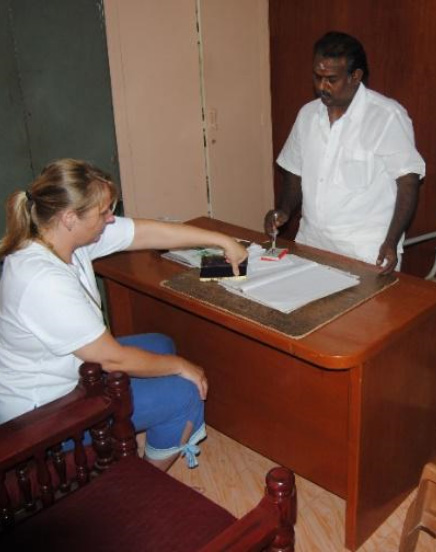
This puja consists of offering flowers, fruits, sweets, clothing, or financial contributions to the naadi reader who performed the palm leaf reading. Concurrently, you receive their blessings.
General Pooja
This general puja is performed to enhance overall well-being and sound health.
Aayul Omam Pooja
This puja is performed to promote longevity and life protection.
Ganapathi Omam Pooja
This puja is performed to avert difficult periods, clear negative energies or black magic, and during the first day of moving into a new home or apartment.
Mangalya Thosha Nivarthi Pooja
Performed to resolve obstacles in marriage, attract constructive energies, and foster a blessed marital life.
Aathma Shanthi Pooja
This puja is conducted upon a bereavement in the family and must be performed on the seashore. It is analogous to a memorial service.
PUJA (POOJA) - DONATIONS AND OFFERINGS
- Food for the underprivileged
- Lighting oil lamps, candles, or burning incense in temples
PUJA (POOJA) - MANTRAS
Sri Sudarshana Maha Mantra, Lakshmi Mantra, Aisvarya Moola Mantra, Sadatcharam Mantra, Shiva Shakthi Mantra
These mantras are recited primarily to neutralize or minimize karmic burdens accumulated from past lifetimes and to alleviate issues arising from envy, adversaries, or curses.
They are typically recited in the early morning hours, which is the most auspicious time. Mantras are chanted 108 to 1,008 times daily over a sacred cycle called a “mandalam”, which spans 48 days. The prescribed number of mandalams ranges from one to five.
Upon completion of the ritual, each participant receives an energized copper plate from the palm leaf library with the specific mantra engraved upon it. This plate should be placed within the home to provide ongoing protection against unfavorable influences. Alternatively, one may wear a consecrated protective talisman or bracelet.